
 +82-2-3496-9783


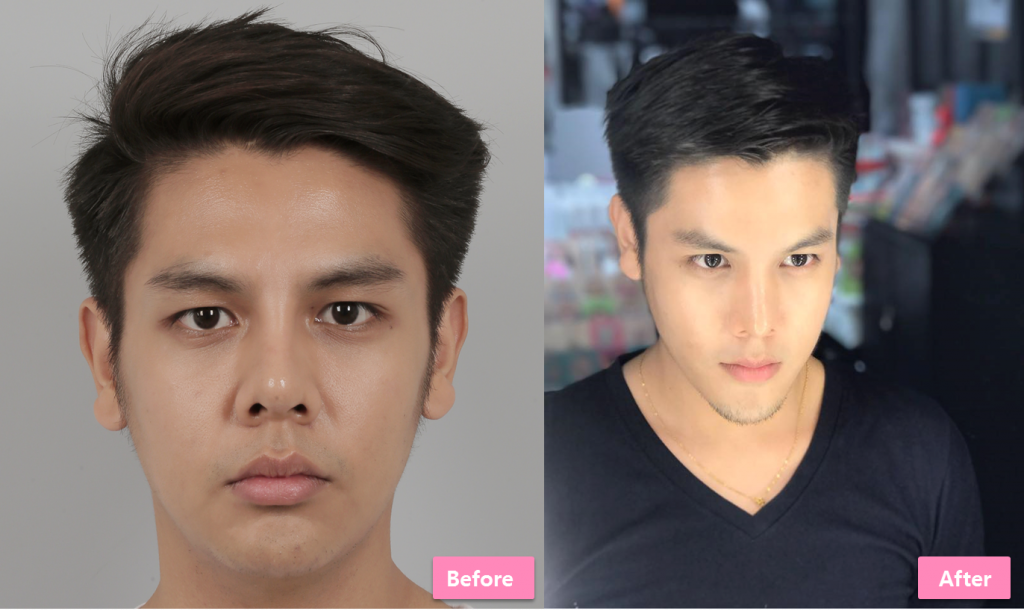
Rhinoplasty is used to alter the shape and size of the nose to balance the facial features. Rhinoplasty can drastically change a person’s facial proportions creating a harmonious face. Problems arise when surgery goes wrong. Surgery can be unsuccessful due to several reasons and that will leave the patient no option but to consider a revision surgery.
Each surgeon has their own technique to perform surgery. This is what adds the complication level to a revision surgery because the current surgeon would not know what procedure was used on the patient. Revision rhinoplasty surgery requires the manipulation of bone, skin, cartilage, soft tissues and implants, so all of these factors have to be taken into consideration before undergoing surgery. The surgeon has to comprehend the errors of the primary surgery in order to be able to create a surgical plan to correct the nose.

Cases that require revision: Do you need a revision rhinoplasty?
There are many types of complications that arise and would require a revision rhinoplasty surgery. The type of problem determines whether you should consider revision surgery.
1. Implant displacement: This type of problem mainly occurred with patients who had an L-shaped implant, and the implant would ‘move’ creating an unnatural bump, or showing the implant shape through the skin.
2. Nasal tip dropping: If the nasal cartilage used was not enough, the cartilage used may not be able to support the weight of the tip, so the cartilage collapses and tip will droop or bend to one side. This does not occur right away, but rather gradually over time.
3. Asymmetry: Some degree of asymmetry is normal in humans so even after surgery asymmetry is not solved 100%. In such cases, depending on the severity of the asymmetry, revision surgery may be required.
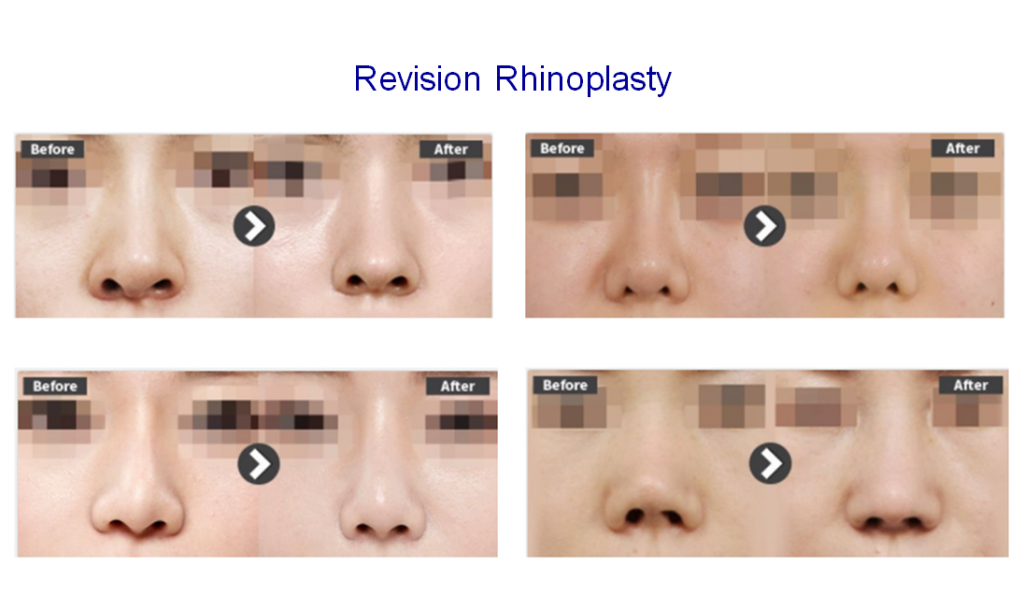
4. Improper implant size: This is characterized by the shape or projection of the nose. If the implant is too big, the nose looks unnatural, wide, etc., and if it is too small, the height of the nasal dorm would not be adequately increased.
5. Nasal dorsum not high enough/too high: The nose bridge is elevated with a silicone implant (for patients who have a low bridge), so if the wrong implant is used then the dorsum will not be effectively elevated. Alternatively, if the implant used is too projected, it can look very unnatural. The right silicone implant should be used to give the right level of elevation.
6. Capsular contracture: This can occur when the body’s immune system reacts to the insertion of a foreign object by creating a capsule. When this occurs, it can lead to various complications like implant protrusion, implant deviation or short nose deformity. Due to the capsular contracture, the distance between nose bridge and tip contracts, creating a deformity. Depending on the individual case, the implant may be removed or replaced.
Things to consider before going for a revision rhinoplasty surgery
1. Unrealistic expectations: Rhinoplasty surgery may not be considered a difficult surgery, but it is in fact, quite a difficult surgery especially if it is a revision case. A person who wants a revision will definitely want to have all their aesthetic ideals met, but the surgeon is there to keep the patient grounded in reality. The structure of the nose has undergone significant change and there is a limit to how much of the nose that can be corrected with surgery. Some things cannot be fixed, so keeping an open mind about this is an important step.
2. Scar tissue: Scar tissue is the body’s repair mechanism to heal trauma or injury, and it grows in random formation. Due to scar tissue formation, revision rhinoplasty can be more complicated. Even though some parts can be removed, the results that can be achieved may be compromised. Post-surgery, scar tissue is hard and revision surgery should only be attempted after healing, as the scar tissues will be softer then. The minimum time to wait for a revision is 6 months, but waiting for a year or more is recommended.

3. Healing time: The healing time for a revision surgery will be longer than a primary surgery. To see the final results, it may take up to a year or more, so keeping that in mind and keeping your expectations in check is another important step.
4. Cost: Due to the complexity of the surgery, the cost will be more than the initial surgery. The surgery time will also be longer.
Keep all the above points in mind, and if you are considering a revision rhinoplasty surgery, please contact us for an online consultation here.
To read more blog posts, click here!


Leave a Reply