
 +82-2-3496-9783


K-Pop 101
If you came to read this article, you would probably already have a solid base knowledge of k-pop. But for those who don’t, here is a very basic rundown of how the Korean pop music industry differs from the Western pop music industry.
Korean entertainment companies are different from Western record labels. Record labels will usually pick up a talented performer, mostly adults who have already been performing, and invest money into their artistic development, production, marketing and other business aspects the artist couldn’t handle on their own. Previously it was prestigious to get swooped up by a big record label, but in the modern day that trend has reversed. These days, many artists at least pretend they are from a small label or totally independent so that they can appear relatable, hard-working and appealing to counter-culture.
This has led to the phenomenon of “industry plants” – where giant record labels or wealthy patrons attempt to make their artists seem self-made and independent, creating the illusion of a successful underdog arc.
Korean entertainment companies however, control far more of the artist’s lives and music. They pick children or teens to become “trainees”, give them intensive singing and dance lessons, put them in an “Idol group” with other trainees and then formally debut them. Group members get extremely limited control over their group’s name, theme, style or music. Instead, these things will be decided by industry analysts. And in Korea, the bigger and wealthier record labels are the ones rookies want to get into the most.
Oh, and k-pop has generations like pokémon. We’re currently on gen 4.
Basically, if Western labels are mining for diamonds, then Korean entertainment companies are growing their own diamonds in a lab.
K-Pop aesthetics, the Nineties to Now
90s K-POP
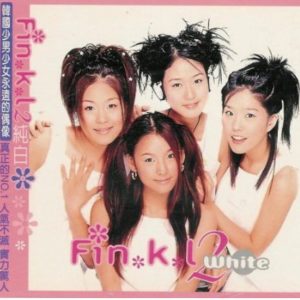
Two boy bands are in rivalry for the position of ‘The First Kpop Group’. One is Taiji and the Boys with their surprise hit song I Know, (난 알아요) where it looks like they filmed the music video in the opening titles of The Fresh Prince of Bel-Air. However the popularity of I Know was somewhat of an accident, and other sources argue that H.O.T with their popular song Candy (캔디) should deserve the title. H.O.T having been trained in a similar way to modern k-pop trainees. As far as aesthetics go, it’s clear that facial beauty was not unimportant, but good music, dance skills and willingness to wear some rather experimental fashion could take you far in the nineties k-pop industry. Girl bands like S.E.S and Fin.k.l show that even when companies were producing groups intended to highlight the beauty of its members, it was a much more realistic standard of beauty that has many differences from the style that later k-pop would become iconic for.
00s K-POP
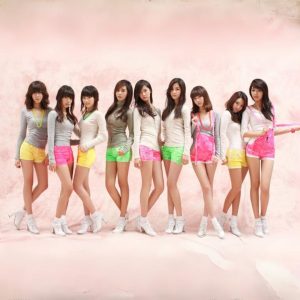
Pictures from the time indicate that, possibly with higher resolution screens, more emphasis was being placed on physical appearance in k-pop idol groups during this time. Although there were still many different kinds of attractiveness on display. The homogenization of the ‘look’ of a k-pop idol, seemed to be just starting among girl groups like Girl’s Generation and T-ara. This was also when roles within groups were becoming more prominent such as singer, rapper, dancer and visual – yes, someone to be in the band because they are good looking. As a side note, the group/duo TVXQ has been around since 2003 so if you watch all their videos in order you get a comprehensive look at men’s fashion and hairstyles over the last 20 years.
10s K-POP
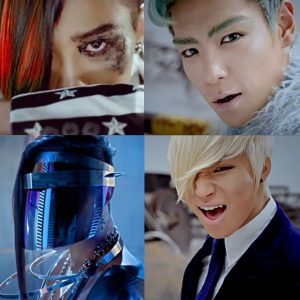
Many many groups would launch in the mid 2010s, including world-dominating superstars BTS and BlackPink. And there are many groups who are also still relevant a decade or so after their debut, such as Red Velvet, Twice, Monsta X and Seventeen. At this time we begin to see the “k-pop look” really solidifying for boy groups and girl groups, especially for those debuting under the large entertainment companies. Slender body, well-balanced facial features, flawless skin and bright eyes would be the new template by which the industry measures beauty.
20s K-POP
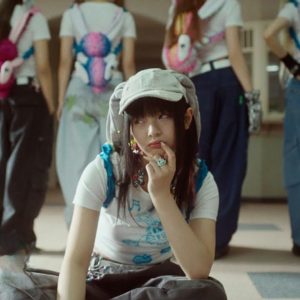
It has been this decade where physical looks have really turned from a preferable trait to an outright necessity for those hoping to join big entertainment companies. This can be seen through the members of groups like aspea, IVE, Le Sserafim, NewJeans and RIIZE – all of whom belong on a catwalk.
How K-Pop Influences Beauty Standards
We are, of course, influenced by the media around us. It’s likely that both k-pop and Korean beauty standards influence each other. But one thing is clear, the features of celebrities are important in South Korea. In the field of plastic surgery specifically, it’s extremely common for patients to come in with a picture of a celebrity to show what kind of result they are hoping for. For female patients the current most popular choices are eyes like IVE’s Jang Won-Young, noses like NewJeans’ Minji and the face shape of aspea’s Karina. And for male patients, actor / musician Cha Eunwoo is the most common choice for eyes, while BTS V is the most popular rhinoplasty inspiration.
ID Hospital Surgeon Dr Ji Hwan Kim highlighting the role celebrities play for people considering plastic Surgery:
ID Hospital Surgeons Dr Kyungmin Lee, Dr Moonki Lee and Dr Chanwoo Park discuss male patient’s surgery desires and comparisons male patients make with celebrities:
Debunking Myths: Not all K-Pop Idols Undergo Surgery
You’d think that the incredibly high beauty standards would encourage covert plastic surgery in the industry on a massive scale. But that’s not always the case. These days, fans are much more involved in the daily lives of idols, including ones who are still trainees. So trying to sneak in any major procedures is not really an option.
Of course, there are idols who have undergone cosmetic surgeries and been very open about it. Many of these idols have been praised for their honesty, and their experiences flip the narrative that if a person wants to change something about their appearance, it means they must dislike themselves. As adults, they not only have the right to make decisions about their bodies, but also to make changes to increase their happiness based on their own ideas of beauty.
The thing is, these days, many idols simply don’t need invasive surgeries to look great.
The Beauty Work Behind the Scenes
If you are a modern k-pop idol, your appearance is just one of the many resources you have in order to get in, or get up, in the industry. Similarly to how actors may have to alter their appearance for a role, being a k-pop star involves having an on-stage and off-stage role you must alter yourself for. How you look is part of your job. Korean netizens can be extremely harsh towards performers who don’t fit exactly into the prescribed “look” for that type of performer. Being extremely honest about appearances is Korean culture, and to some level, there can be judgement that if an idol doesn’t look a certain way then that idol isn’t doing their job properly. Most people don’t really understand the extent to which all professionally produced photos and videos of a celebrity are edited to some degree. Sometimes for innocent reasons, like to enhance colors, and other times to beautify the subject. Remove some skin texture and flyaway hairs, maybe change the skin colour etc. And that’s after they’ve been seen to by some of the best makeup artists, hairdressers and stylists. Plus, that choreography must be pretty intense cardio.
Access to Luxury Beauty Treatments
To add even more to the above, successful k-pop idols have essentially unlimited access to cosmetic dermatologists and dentists who can give them the best teeth straightening, anti-aging, skin perfecting technology that currently exists. In Korea, it’s normal for people on even a basic office worker’s salary to go to a cosmetic dermatology clinic. Prices are low and standards of treatment are high, so it’s not a luxury only available to the rich. So heaven only knows what it’s possible to get if you are actually rich.
Furthermore, the scope of what non-surgical procedures can do is much wider in Korea. It’s not just lip fillers and botox, the ID Clinic for example offers treatments such as, non-surgical skin volumizing, skin tone evening, rosacea treatment, scar minimizing, acne treatment, a large variety of non-invasive anti-aging treatments including shurink, inmode and ulthera, square jaw botox, smile botox, facial contouring botox, pico toning, and skin boosters such as rejuran healer. After that, not glowing with your radiant skin would be a challenge.
Promoting a Healthy Body Image Among Idols and Fans
There are changes on the horizon. It is a very far horizon but it is happening. The internet and the things it enables have supercharged the rapid development of these beauty standards. But it may also be the undoing of them too. Global clothing and beauty brands have already noticed how the younger generation of consumers respond well to representations of authenticity, diversity and embracing imperfection. And these global trends will have some impact on Korea, the extent of which remains to be seen. There are already idols starting to buck the trend, as well as those who have been against it from the start.
And if you are like the patients from the above videos who want their features to resemble those of a specific celebrity – that’s great! Self respect and self acceptance don’t mean that you aren’t allowed to make changes for your happiness.
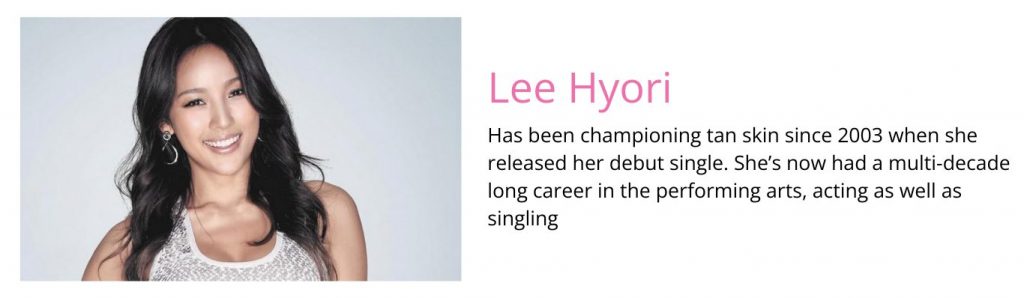
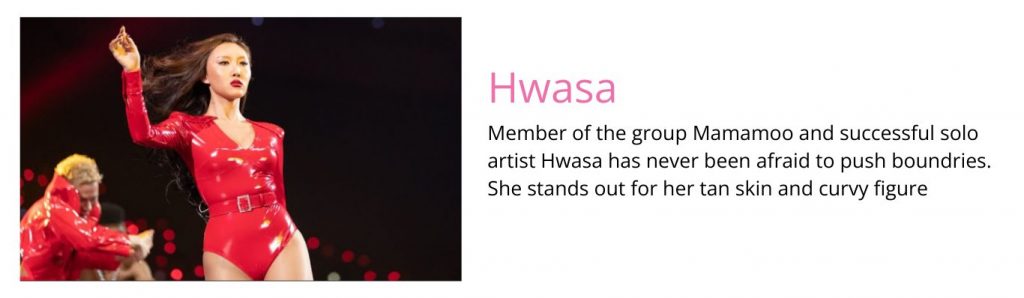
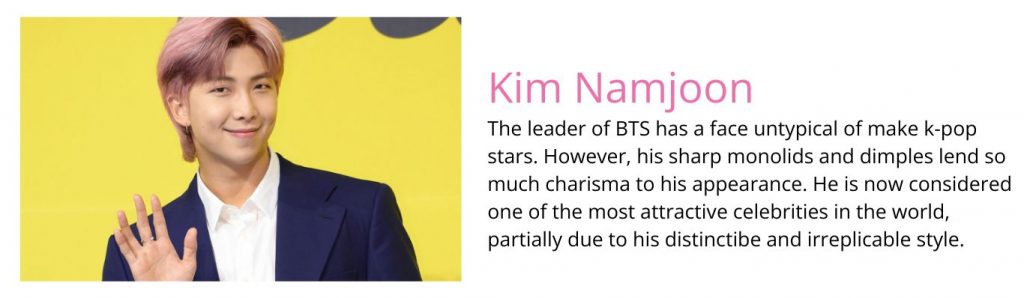
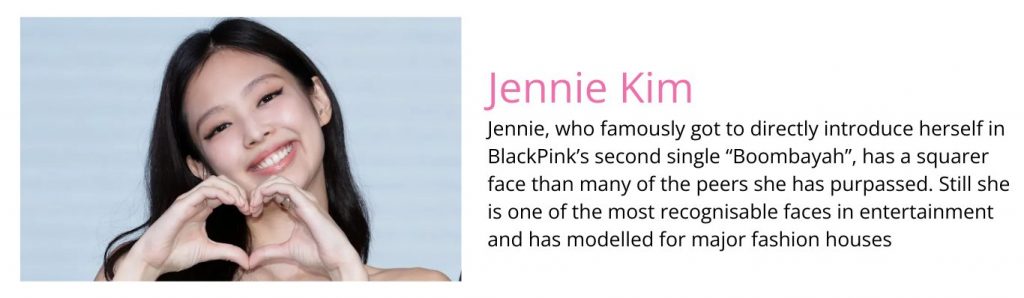
Idols Who are Loved Without Needing to Match Beauty Standards


Leave a Reply