
 +82-2-3496-9783


When I, a cisgender woman, walked into The Porterbrook Clinic in Sheffield I didn’t know that it was mainly used as a Gender Identity Clinic. I had been referred there by a National Health Service doctor for treatment of my assault trauma. But basically all of other patients I saw at the clinic were transgender. In the waiting room, I heard one man whispering with his partner about what they still needed to do to get her gender legally changed.
“Just get a letter from this doctor and that doctor … then we need to sign the … and then only six more months.”
It was a high-stakes strategy meeting.
I waited a total of one year and nine months before I could start my treatment at Porterbrook. According to the NHS website, the waiting time is now five years.
The Porterbrook Clinic is one of only eight Gender Identity Clinics in the United Kingdom. They are currently processing referrals from the Autumn of 2018.
The landscape of transgender healthcare is uneven, bureaucratic and expensive to traverse. At ID Hospital we have been providing expert facial feminization surgery to both cis and trans women for nineteen years. In thats article we want to provide readers with a full contextual overview of gender-affirming surgeries for transgender women, their methodology, history, and accessibility.
Terms
Gender Reassignment Surgery / Gender Affirmation Surgery: – Any surgical procedure that intends to align a transgender person’s body to more closely to their gender identity.
Facial Feminization Surgery: – A package of customized cosmetic, feminizing surgeries. It is usually for transgender women, but can also be performed on anyone who wishes to get rid of unwanted masculine facial characteristics.
“Call me not Lord, for I am a Lady” – History of Gender-Affirming Surgery
As you can imagine, the history of gender-affirming surgeries is absolutely insane. The first person to reportedly request surgical change of their genitalia was Roman Emperor Elagabalus (204 to 222 AD). Elagabalus was certainly one of the more eccentric Roman Emperors. According to chronicler Cassius Dio, Elagabalus dressed in female clothing and offered large sums of money to any doctor who could give him female reproductive organs. Although there are doubts about the accuracy of Dio’s account, as he had possible political reasons for wishing to disparage him.
Elagabalus reportedly also got married five times to four women, possibly had two more husbands, possibly started a cult, built a temple and named it The Elagabalium, allowed women to attend Senate meetings and tried to assassinate his cousin. At eighteen-years-old, he was murdered by his own bodyguards and thrown into the Tiber.
The first confirmed person to have gender-reassignment surgery was Dora Richter. Dora was a transgender woman and low-income laborer born in 1892 in what is now the Czech Republic. She had to present as male at work, and dressed as a woman only in her free time – for which she was arrested more than once. She was eventually employed at the Institute for Sexual Research in Berlin, which was founded by the famous Magnus Hirschfeld. Hirschfield was highly educated in philosophy and literature, as well as being a physician. He was an advocate for sexual minorities, transgender rights, women’s rights and greater education about sex in general. He himself was male-attracted, and had two simultaneous life partners, a German man named Karl Giese and a Chinese man named Li Shiu Tong. He met Li in Shanghai while on an international speaking tour. It appears that Hirschfeld stayed mostly on the subject of heterosexual activity when in more conservative countries outside of Europe, but that didn’t stop him annoying the Japanese government by praising Japanese feminist groups who were fighting for women’s right to vote.
Hirschfeld was reportedly fond of Dora, calling her “Dorchen”. She had both a penectomy and rudimentary vaginoplasty at the institute, having been castrated at her own request some years earlier.
As the Weimar Republic fell and fascist sentiment grew in Germany, The Institute for Sexual Research was stormed by Nazi supporters who stole and destroyed almost all of the important research papers and books. The Nazi SA would also arrive at the Institute to continue the ransacking and book burning. Some of the staff working at the institute sadly found themselves at the mercy of the Nazis, who viewed everything The Institute was doing as perverse and dangerous. We do not know their fates after they were put in the cattle cars. Hirschfeld, Giese and Li fled Germany, however unfortunately Giese took his own life to escape the camps when the Nazis invaded Czechoslovakia. Hirschfeld and Li escaped to France, where Hirschfeld died of natural causes in 1935. The only one of the trio to survive the Holocaust was Li Shiu Tong, who died in Canada in 1993. For many years, people believed Dora was killed when the institute was attacked. However, in June 2023 the Lili-Elbe-Bibliothek (Library of Lili Elbe) Twitter account claimed they had found census evidence that Dora had returned to her home country and was alive until at least 1939. She was now officially living under the name Dora.
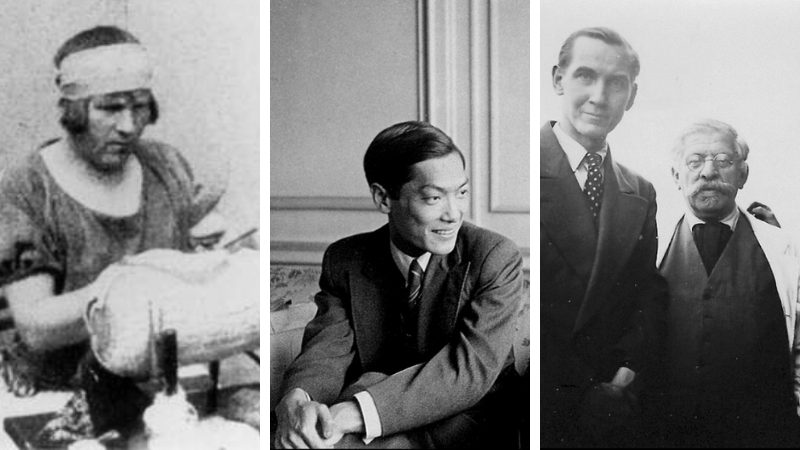
Dora’s vaginoplasty, as it was the first of its kind, was extremely experimental. She had an “artificial vagina” grafted onto her body, Although, it’s extremely hard to find any explanation of what exactly an “artificial vagina” is.
The field of male-to-female gender reassignment surgery would soon after switch to mostly using various versions of the penile inversion vaginoplasty, where a neovagina can be made from the patient’s existing genital tissue.
“… but, my dears, nature made a mistake which I have had corrected and now I am your daughter.”
– Christine Jorgensen, coming out in a letter to her parents (1952)
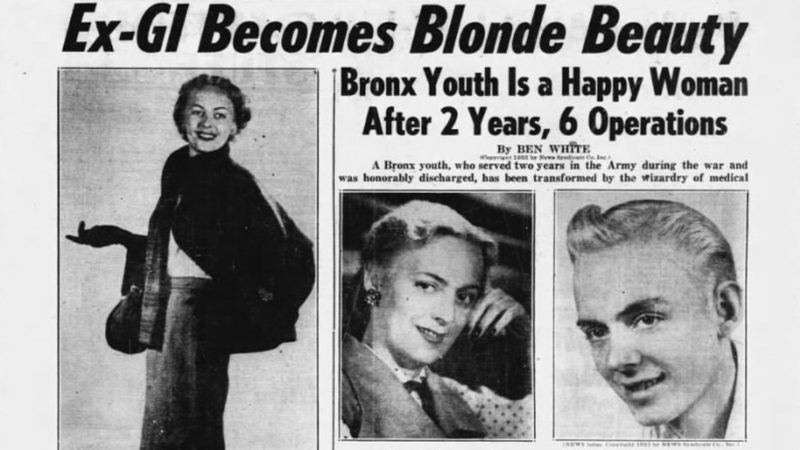
In December 1952, the New York Daily News would hit America in the face with the story of Christine Jorgensen’s transformation from male to female, with the headline “EX-GI BECOMES BLONE BEAUTY Operations Transform Bronx Youth”. The Daily News had outed Christine without her permission, but the incredible amount of interest the story received meant she was able to launch a career in entertainment. Although she did face a lot of hardship and discrimination in her life, she is credited not just as an icon for other transgender women, but also being a catalyst for funding and research into gender reassignment surgery and hormone replacement therapy in the U.S.
Denmark was an early pioneer of gender-affirming surgeries, but unfortunately the law stated that these surgeries could only be performed on Danish citizens. This meant that the cascade of letters some Danish doctors received from transgender people wanting surgeries, could only be replied to in disappointment. These doctors needed an open-minded, highly-educated doctor in another country to refer these cases to, and many ended up with Dr. Harry Benjamin. Benjamin was born in Germany and had studied at the Institute, and later moved to America. Benjamin gave Christine Jorgensen credit as her story and public visibility caused enough scientific interest to get his research off the ground.
Also during the 1950s, similar public interest in transgender people was growing in Europe, although not always positive. There was Jaqueline Charlotte Dufresnoy, who was a widely known transgender entertainer in France, and spitfire-pilot / motor racing entrepreneur Roberta Cowell secretly underwent an illegal orchiectomy in 1951.
Many advancements in both diagnosing gender dysphoria and gender-affirming surgery techniques would continue to trickle in from the US during the 1960s and 1970s. But by the 1970s the gold-standard of transgender healthcare was back in Europe at the University Hospital of the Free University of Amsterdam.
In 1980, for the first time, Gender Identity Disorder was added to the DSM-5, making it an officially recognized medical condition. It would be renamed to Gender Dysphoria in 2013.
The Medical Process of Gender-Affirming Surgeries
Genital Surgery
– Orchiectomy, Penectomy and Vaginoplasty
Previously done as separate operations, these three now usually come as a set. Orchiectomy is removal of the testes, penectomy is removal of the penis and vaginoplasty is the construction of the vagina. Usually the specialized team of surgeons performing these operations can create both the vaginal canal and the labia out of the tissue of the previous genitals. This creates functional vaginas with sensation and correctly positioned urethra. Sometimes extra skin from the thigh or abdomen is required.
Modern gender-affirming genital surgeries are intense procedures, with Johns Hopkins advising of a five to six-day hospitalization period after a seven to ten-hour surgery. You will be fitted with a temporary drain and catheter and likely not stand except to go to the bathroom for most of your time in hospital. And you must follow strict hygiene rules.
You must also mentally prepare yourself for the process of dilation. This is where cylindrical dilators are inserted to make sure the vaginal canal does not heal over and to check the ability of the vagina to expand. You will be asked to do this on yourself but you may still feel embarrassment around staff teaching and inspecting the dilation process. It is very important that you don’t let any feelings of shyness or embarrassment stop you from reporting pain to your care team.
Facial Feminization Surgery
Facial Feminization Surgery can encompass any facial surgery done for the purpose of achieving a more feminine appearance. The history of facial feminization surgery for trans women goes as far back as the field of plastic surgery itself.
Popular facial feminization procedures include but are not limited to:
– Brow Bone Reduction
During Brow Bone Reduction the thick outer-orbital ridge of the brow is shaved down using special surgical grade tools. However, the center of the brow, the part between your eyebrows sits over the frontal sinus and therefore needs to be carefully re-positioned with the aid of surgical-grade metal pins.
– Forehead Reduction
This is a surgery where an incision is made across the hairline and the tissue is gently moved down to create a smaller length between eyes and forehead. The incision is a wave or zig-zag incision so that the resulting scar can be hidden in the patient’s hairline. Endotine fixings (bio-absorbable pins that can hold tissue in its new position) may be applied but they are not necessary in every case. If they are used, they will absorb harmlessly into the body after one year and leave the fixed tissue in place.
– Cheekbone Reduction
Done through an inter-oral incision (inside the mouth), cheekbone reduction doesn’t leave visible scars. It can be done for patients who have more horizontally wide faces or who wish for a more “youthful” look, as high cheekbones are more associated with a mature, sexier image.
Surgeons carefully make incisions across the front and back of each cheekbone, isolating the most prominent part. It can then be gently pushed inwards and reattached with surgical pins.
– V-Line Surgery
V-Line Surgery can slim and correct the positioning of both the outer-jawline and front chin. Just like cheekbone reduction surgery The incisions for v-line surgery are inter-oral and do not leave visible scars. Having v-line surgery as part of facial feminization means trying to slim the jaw and arrange the chin tip to suit the new line. This is because women’s faces are generally smaller and slimmer compared to men’s, especially in the jaw area.
The patented “Diamond Osteotomy” technique for reconstruction and repositioning of the chin line is patented and can only be performed by ID Hospital Surgeons.
Any form of jaw surgery is serious. It requires overnight hospitalization, general anesthesia and a period after surgery to adjust back to opening your jaw and eating solid food.
– Rhinoplasty
Rhinoplasty is a category of surgery in itself. These days there is a type of rhinoplasty for almost any kind of result you want to achieve. Surgery can heighten, lower, thin, reconstruct and straighten any part of the nose. ID Hospital offers a wide range of rhinoplasty options for our diverse clientele. With some of the most popular choices being Asian rhinoplasty, hump-reduction rhinoplasty and revision rhinoplasty. Type of rhinoplasty will decide the type of anesthesia used, incision area and hospitalization requirements.
Which surgeries you will receive upon deciding to get facial feminization surgery are unique to each individual’s case. As which features may be “masculinizing” are different depending on your unique facial structure.
It’s important for trans women to try and have these surgeries at an institution like ID Hospital, where there are surgeons trained to perform these procedures on trans women specifically, not just on cisgender people.
Breast Augmentation
Many women feel connected to their breasts as symbols of their gender and sexuality. Transgender women are no different.
Many transgender women can naturally have less fat in the upper chest, which is why it is more common for them to choose breast implant surgery than other forms of breast augmentation such as fatgrafting.the important things to consider when choosing breast implants are
– Shape
The two shapes breast implants are made in are circular and teardrop. As you’d expect, circular implants create breasts with higher projection and teardrop implants create a more natural looking breast.
– Size
The size of breast implant should be decided in relation to your individual body, rather than copying the size of a friend or influencer. Your height, figure and desired results all factor into choosing the best size for you.
– Material
Saline implants are made of a silicone shell that is filled with salt water. Because your surgeon can fill the implant with saline after it has been put into your body, creating a smaller incision. Unlike silicone, saline implants will not hurt you if they rupture. But they have a reportedly higher rate of creasing and wrinkling.
Silicone implants are sealed during the manufacturing process, and contain silicone gel. If the implant ruptures and the silicone spills into your body you need to see a physician as soon as you can and the defective implant will have to be surgically removed. However, this type of breast implant is the best for recreating natural-feeling breasts.
– Texture
There are two options: smooth and textured implants. Smooth implants move around more freely whereas textured implants use their outer surface to hold in place more.
– Manufacturer
Check the reputation of the breast implant manufacturer as part of your decision process. Only certain brands are approved for use in certain countries. Brand an also impact the cost of the implant surgery. At ID Hospital we offer three brands of implant: Sebbin, Mentor and Motiva.
– Incision Area
There are two places a breast implant can be inserted: Through an armpit incision or an under-bust incision. Armpit incisions are good if you absolutely don’t want an incision line near your breast area. However, it has a longer healing time and, from person to person, can stand out more than under-bust.
Facial Feminization and Breast Augmentation Procedures at ID Hospital
ID Hospital has been performing common facial feminization surgeries since the hospital opened in 2004. Then it was called the Sang Hoon Park Plastic Sry clinic, after the hospital’s founder and director, and it was the first specialist facial bone clinic in Korea.
Since then, the Hospital has expanded to offer a wide variety of contouring and feminization procedures. This includes all the surgeries in the above Facial Feminization list and Breast Augmentations. Our doctors understand the differences between surgery on a cisgender and transgender woman, and always listen to the patient’s vision for themselves.
We are proud to have worked with transgender influencers and entertainers to provide them more confidence and reduce their dysphoria, matching minds and bodies. And we do not judge patients according to gender identity or sexual orientation.
The elephant in the room with many gender-affirming surgeries is the exorbitant cost. One article stated that just genital surgeries can go between $10,000 and $20,000 in Australia alone, one of the most expensive plastic surgery locations. ID Hospital’s annual ID Model Competition allows a select number of winning candidates to have their choice of plastic surgery procedures for free. This includes transgender women who wish to apply for complete facial feminization surgery – we have many applicants and many winners. This allows trans women who might have never been able to pay for facial feminization by themselves the chance to live with bodies that align more closely to their gender identity.
What is Korea Like for LGBT People?
South Korea is considered a safe country for queer and trans people to travel to. Although some LGBTQ+ travel websites still recommend exercising sensible caution. The crime rate is low in Korea, so there is little physical danger to one’s person. And women can walk around at night alone in relative comfort.
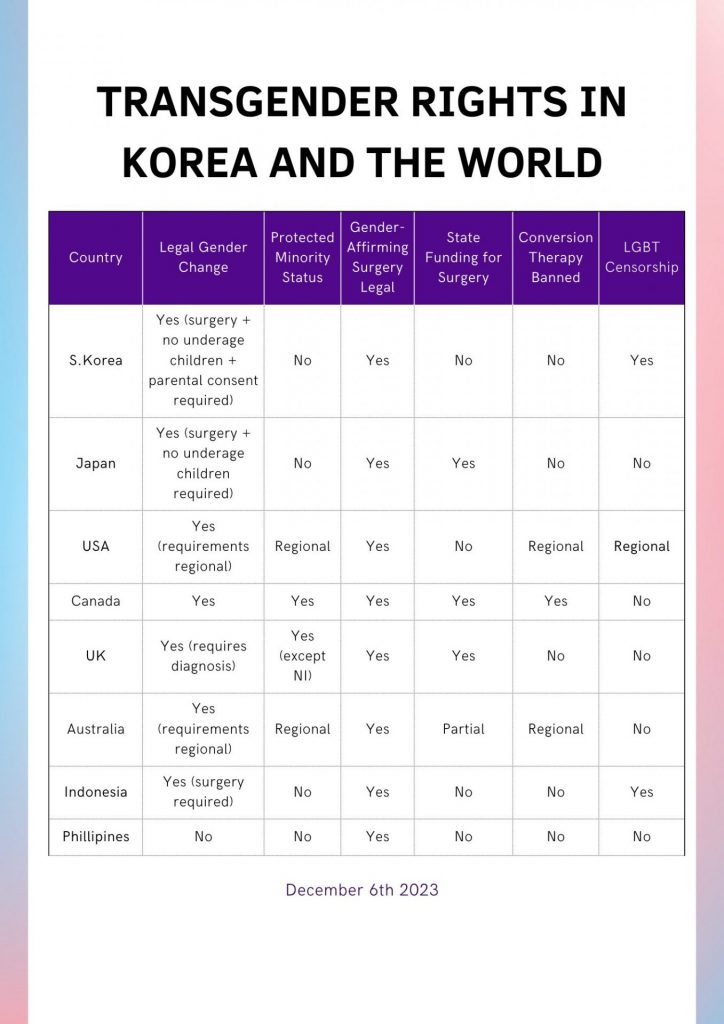
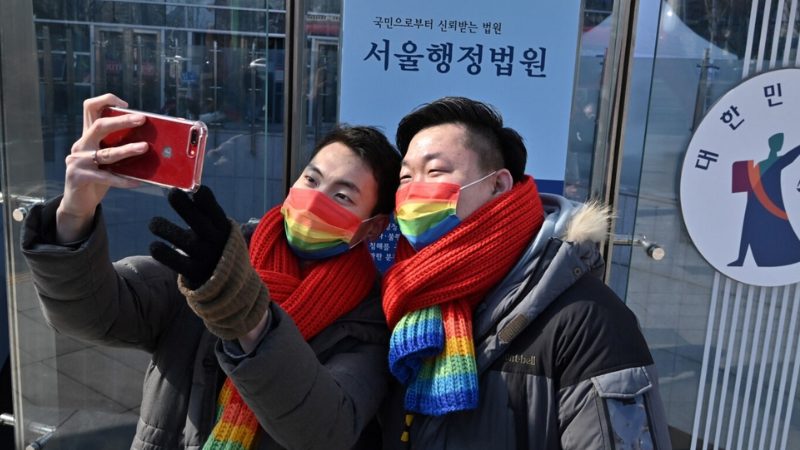
Despite lacking formal legal protection for LGBT people, many outside observers are hopeful of change will point to the baby steps South Korea is taking to fix some of the inequality in its society. Seoul has its own queer film festival and pride festival. When extremist Christian groups tried to get Seoul pride banned in 2015, the Supreme Court smacked them down, saying that the festival was protected under freedom of expression laws. In 2021, Kim Yong-Min sued the National Health Insurance Service for not allowing him to register his partner So Seong-Wook as a dependent on his health insurance plan. The couple won, which represents the first time the legitimacy of homosexual relationships has been acknowledged in Korean law – which can act as a precedent for further legal equality.
In June of 2023, South Korea’s first same-sex marriage bill was introduced and is currently under debate. Even if it doesn’t pass, which is very likely, the bill would have moved queer rights further into the political spotlight.
The Guardian reported that a similar equality effort in 2014 prompted some religious groups to warn that it could “legalize” homosexuality. Someone needs to tell them that homosexuality has never been illegal in Korea.
Final Thoughts
The surgeries discussed in this article are incredibly important to transgender women and can have a myriad of positive effects on their lives, confidence and comfortability in society. Gender affirming surgeries are just one stop on a person’s transition journey, that they may or may not want.
The journey out of gender dysphoria is complex and stressful. As a top plastic surgery hospital, we hope this article is an aid to people looking to research and understand feminization surgeries.
While researching for this article, I happened to run into relevant (and depressing) news from my home country.
The United Kingdom’s Health Secretary Steve Barclay made a statement two months ago saying that transgender women are to be banned from female wards in government hospitals. Instead he wants them to stay in the male wards, saying that the Conservative Party “knows what a woman is”. He also tried to veil this decision as being pro-women’s rights.
There are a number of complaints from cisgender women about having to share wards with transgender women – and that number is zero. There have been no complaints.
Fellow Conservative Party politician Jamie Wallis, who is also an openly transgender man, made a mockery of Barclay, commenting “with our continued support and encouragement, I hope to see him solve problems that actually exist.”


Leave a Reply