
 +82-2-3496-9783


In plastic surgery, perhaps more than any other field of medicine, focus is put on minimizing visible scarring for obvious reasons. Plastic surgery patients have, in most cases, parted with large amounts of money so that a surgical expert can break and reset their nose – but aesthetically. So developing a discolored, raised, prominent scar is a serious concern for people who are trying to get a more satisfactory look through these procedures.
This article will go through the kind of scars relevant to plastic surgery, how both doctors and patients have a role to play in minimizing the impact of post-surgical scarring in plastic surgery, as well as look to the future for emerging technologies that could be applicable in plastic surgery.
Understanding Plastic Surgery
Plastic surgery is a vast field that covers every external area of the body you can think of. From forehead reductions to facial contouring, breast augmentations, and leg liposuction, plastic surgery only seems to get more popular as procedures and technology advance.

Common types of plastic surgery procedures
Common procedures that we perform here at ID Hospital include double eyelid surgery, upper & lower blepharoplasty, brow lift, brow bone reduction, rhinoplasty, septoplasty, face lifting, neck lifting, genio implants, facial fat grafting, breast augmentation, facial feminization, tummy tuck, and liposuction – and that’s not even the whole list. It’s likely that if you have an insecurity, there’s a surgery available to make it go away.
The role of plastic surgery in enhancing aesthetics and self-esteem
However, plastic surgery still remains controversial in some circles. The sociological/societal argument is that, while plastic surgery may increase an individual’s self-esteem, undisclosed plastic surgery, especially in the media and entertainment industries can contribute to lower self-esteem and hyper-fixation on appearance in the general public, particularly among young people. This post is not going to weigh in on this debate. If you’re here, you want to learn about post-operative plastic surgery scarring. So let’s begin.
The Nature of Post-Surgical Scarring.
Scarring occurs when the skin is cut, grazed, or otherwise split open in order to pull itself back together and make a stronger surface to try and prevent future damage. However large, misshapen or otherwise prominent scars can have a negative impact on our confidence and self-esteem.
Like in all surgeries, where there’s an incision it will leave a scar. With plastic surgery, scarring is a main concern, therefore surgeons put in effort to minimize plastic surgery scarring. Great trouble is also made to manage patient expectations, as many factors influence plastic surgery scarring which we will go through below.
Frequency of bad plastic surgery scarring
Many things can influence the severity of scarring after plastic surgery. Stewart KJ (2006) and Nava MB (2017) are both cited in Téot L et al. (2020), who says that:
“Unfavorable scarring is not uncommon following cosmetic surgery; the incidence can vary from 5% after breast augmentation to as high as 8% after abdominoplasty.”
According to research done in 2011, in the UK approximately a quarter of medical malpractice claims that arise from plastic surgery are about scarring as a result of the respective procedure (Stone C, 2011, cited in Téot et al., 2020). But what are the factors that can contribute to the size and unsightliness of scars? To know that we should first get to know scars a little better
Types of Plastic Surgery Scarring: from The Cleveland Clinic (2021b)
There are several more types of scarring in medicine, but we will focus only on those relevant to plastic surgery procedures.
- Flat scars
This is what most people think of when they think of a scar. It can raise a little bit, but as the name suggests it goes back down to the level of the surrounding skin. They will then begin to fade, usually remaining slightly discolored compared to regular skin tone. This is the type of scar that you are hoping for and that the majority of plastic surgery patients get. - Hypertrophic scars
Often called “raised” scars, they are discolored and protruding. This type of scar can reduce over time but it’s almost certain it will still be a little bit raised on the skin. However, unlike keloid scars, they don’t spread outside of the injury site. - Keloid scars
Keloid scars are the worst case scenario for most people. They are not only raised and discolored but can stimulate scar tissue to grow outside on the original injury site and even form lumps or balled-up tissue that is very visible on the skin. According to The American Academy of Dermatology (2022), people of all ethnicities can develop keloids. But some ethnic groups are more prone to it, such as people of Asian, Latin American or Mediterranean descent.
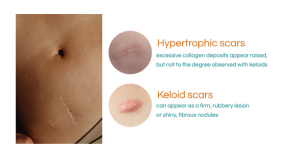
Factors Influencing Plastic Surgery Scars:
Surgeon’s skill and technique
Well-trained and experienced surgeons do their best to minimize plastic surgery scarring wherever possible. That said, many surgeons use different surgical methods to achieve that goal. At ID Hospital our surgeons always explain what type of incision they’re going to use, why they use it, and where the resulting scar will be.
If your surgeon doesn’t take the time to explain this to you, that’s a warning sign.
Patient’s genetics
Risk of more severe scarring such as hypertrophic sc
ars and keloids can have a lot to do with your genetic makeup. In Thompson et al.’s study Genetic Risk Factors for Hypertrophic Scar Development (2013) they conclude that race does play a part in the likelihood of developing hypertrophic scars. With the most susceptible being those of Native American or Native Alaskan ethnicity. The Cleveland clinic (2021a) expands on this genetic component, stating that anyone with a family history of hypertrophic scarring should think very carefully about elective operations such as plastic surgery.
As for keloid scarring, Murray (1981) and Ogawa (2017) are cited in the article Skin Care Management for Medical and Aesthetic Procedures to Prevent Scarring (2022) by Jourdan et al. The relevant passage reads:
“Severe scarring such as keloid lesions often run in families and in populations of African, Chinese and Polynesian origin. However, those of Indian and Malaysian origin and interestingly, African albinos do not seem to form keloids. People of European origin living in the tropics have a greater keloidal susceptibility. […] Spontaneous keloids have been associated with certain genetic and inflammatory disorders.”
Your genetic makeup and family history can influence your risk of developing the more severe forms of plastic surgery scarring.
Wound care and aftercare
Wound healing is commonly known to be a three step process.
Step one is inflammation. This is a natural immune system reaction to any open wound. Inflamed skin is usually swollen, red and sensitive to the touch. Step two is proliferation, this is where the body re-builds cells to help the wound close. This is the stage when the danger of infection is at its highest. So it’s important to keep your scars clean, disinfected and moisturized. Step three is remodeling. This is a long process that can take up to a year from the initial incision. The wound begins to contract and remodeling begins using collagen to make a stronger barrier of skin (Jourdan M, et al., 2022).
The key phrase is ‘controlled healing’. Follow all your post-op aftercare rules. They will not just minimize the look of your scar, but also prevent infection and promote better healing.
Patient’s overall health
Your overall health is a factor that influences plastic surgery scarring. Some of it is within your control, like substance use (including alcohol), unprotected exposure to the sun and nicotine consumption. But pre-existing medical conditions such as diabetes or hypertension are usually not good for plastic surgery scarring.
The location of the surgery
This feels obvious. The location of the incision is going to count significantly towards scar visibility. A nose job -incision under the nose- will be significantly less obvious than a tummy tuck –incision across the lower abdomen. ID Hospital’s surgeons are innovating new ways to hide scarring, such as a zigzag incision along the hairline for a forehead reduction, a choice of scar hiding methods for a face lift, and incision from inside the mouth for facial contouring.
The area of the body operated on can also directly affect scar healing. Our bodies have high-tension and low-tension areas. High-tension areas are basically places where the skin contacts and expands as we move. This is one of the reasons that it isn’t advisable to start intensive exercise for a number of weeks or months following plastic surgery. Try not to stretch the wound area and you will have a thinner, better-looking scar.
Managing patient expectations
One of the worst things a consulting team can do is not making sure that the patient is informed on the surgery. It can lead a patient to be upset about the inevitable swelling, bruising and scarring. Doctors and consultants both have a role in informing the patient about the surgery to the extent that their expectations become realistic, and they can expect the post-operative scarring.
Managing and Minimizing Post-Surgical Plastic Surgery Scarring
Pre-Operative Considerations
Before your surgery, good plastic surgeons will use a method like the below “Scar Risk and Acceptance Matrix” to evaluate the likelihood of scarring and the likelihood of a patient having a disproportionately negative reaction to scarring.

Source: Textbook on Scar Management: State of the Art Management and Emerging Technologies (Téot et al., 2020) Chapter 45: Management of Scarring Following Aesthetic Surgery. (Chambers A, 2020)
As you can see, everything from pre-existing health conditions, to skin type, to sunbeds, smoking and alcohol can contribute to development of plastic surgery scarring. But also patient knowledge and expectations can predict how well a patient might react to, or accept post-surgical scarring.
This is why good surgeons will tell their patient about the scar placement, severity and fading timeline in order to help manage their expectations to what is realistic. You should also be well informed about wound aftercare upon being discharged from your chosen plastic surgery hospital or clinic.
Surgical techniques to reduce scarring
Commonly used surgical techniques include positioning the incision so that it will receive the minimum amount of skin tension and ensuring the wound has good blood flow. Plastic surgeons will also be aware of how factors like age, skin type and ethnicity affect scar formation and the likeliness of hypertrophics or keloids, and will inform their patients of this. (Son D and Harijan A, 2014).
Post-Operative care and wound management
We advise almost all plastic surgery patients to take a taxi or get a lift home if they’ve just been discharged, for their own safety. It is not safe to drive or even use public transport if you have recently been anesthetized. Light walking can help reduce swelling. As well as trying to eat healthily as you rest and heal. Attend your post-op appointments, and take your prescribed medications.
For scar reduction, the best things to do are to keep the area disinfected, moist, and away from the sun and to also follow your aftercare schedule.
Visual Guidance and the Importance of Before and After Photos
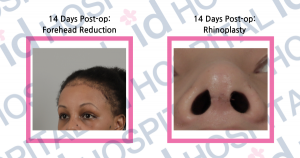
Before and after photos are an extremely useful tool in patient education. One patient at our hospital was in a consoltation with a surgeon about her planned breast augmentation. For breast augmentation with implants, those implants are usually inserted through an incision either under the bust or from the armpit. This patient had decided in advance that she wanted an armpit incision. However, when ID’s surgeon showed her pictures of the armpit incision scar versus the under-bust incision scar, the patient looked at the under-bust photo and exclaimed “Oh, that’s nothing”. She completely changed her mind and had her implants inserted through an under-bust incision instead. This is just one example of how important before and after photos are important visual aids in helping you make decisions about your surgery.
The importance of patient compliance
Yes, you won’t be able to shower for quite a while. Yes, you will feel high coming round from anesthesia and then you will feel terrible. Yes, rhinoplasty patients have to sleep sitting up and disinfect their nostrils twice a day. Especially if you’ve had multiple surgeries, the strict aftercare rules can seem too much. But following them is the best thing you can do, not just to minimize scarring but to prevent serious complications.
From Overview of Surgical Scar Prevention and Management by Daegu Son and Aram Harijan (2014):
“The management of a surgical incision does not end when the sutures are removed. Surgical scar care should be continued for one year. Patient participation is paramount in obtaining the optimal outcome.”
Advances in Scar Management
Emerging technologies and treatments
In a study conducted by Capon et al. in 2010, suggests that a treatment called LASH (Laser Assisted Skin Healing), which is performed directly after the surgery has been completed can have a beneficial effect on scar healing and appearance. This laser treatment, as well as a similar laser treatment called Pulsed Dye Laser (PDL), has been found effective by other researchers such as Leclère and Mordon (2010) and Casanova et al. (2017). However, only PDL and not LASH is being widely adopted in both normal and plastic surgery hospitals.

The future of scar reduction in plastic surgery
As Pulse Dye Laser becomes more popular worldwide, it seems it will naturally be a perfect match for plastic surgery. Soon we might be thinking not about scar reduction, but about scar prevention.
Summary
- All surgeries will leave scars.
- Some plastic surgery procedures leave scars that are not visible, some will leave as little visible scarring as possible, and some will leave clearly visible scarring.
- Informed decision-making is the most important thing when you are concerned with plastic surgery scarring.
- Your overall health and genetic background are factors that can lead to more extreme scarring.
- Talk to your surgeon about how they intend to minimize plastic surgery scarring and ask for visual examples.
- How well you stick to your aftercare plan, as well as how healthy you are in general, can affect your scar healing.
- Have realistic expectations.


Sources:
Stewart KJ et al.,(2006) ‘Complications of 278 consecutive abdominoplasties’. J Plast Reconstr Aesthet Surg. 59(11):1152–5.
Nava MB et al,.(2017) ‘How to prevent complications in breast augmentation’ Gland Surg. 2017;6(2):210.
Stone C,(2011) ‘Scar revision costs, Unsightly Claims’ Personal Inj Law J. 2011:15–9.
Chambers A.(2020) ‘Management of Scarring Following Aesthetic Surgery’, 2020 Dec 8. In: Téot L, Mustoe TA, Middelkoop E, et al., editors. Textbook on Scar Management: State of the Art Management and Emerging Technologies [Internet]. Cham (CH): Springer; 2020. Chapter 45. Available from: https://www.ncbi.nlm.nih.gov/books/NBK586076/ doi: 10.1007/978-3-030-44766-3_45 (Accessed 9th of November 2023).
Ogawa R. ‘Keloid and hypertrophic scars are the result of chronic inflammation in the reticular dermis’ Int J Mol Sci. 2017;18:3, Available from: https://www.mdpi.com/1422-0067/18/3/606, doi:10.3390/ijms18030606 (Accessed November 10th 2023)
Murray JC et al., ‘Keloids: a review’ J Am Acad Dermatol. 1981;4(4):461–470. Available from: https://www.sciencedirect.com/science/article/abs/pii/S0190962281700483 doi:10.1016/s0190-9622(81)70048-37014664 (Accessed November 10th 2023)
The Cleveland Clinic (2021a) Available at: https://my.clevelandclinic.org/health/diseases/21466-hypertrophic-scar (Accessed 10th of November 2023)
Jourdan M et al., (2019) Skin Care Management For Medical And Aesthetic Procedures To Prevent Scarring, Clinical, Cosmetic and Investigational Dermatology, 12:, 799-804, Available from https://www.tandfonline.com/doi/full/10.2147/CCID.S218134 doi:10.2147/ccid.s218134 (Accessed November 10th 2023)
The American Academy of Dermatology (2022), Available at: https://www.aad.org/public/diseases/a-z/keloids-overview#:~:text=People%20of%20all%20races%20get,have%20a%20lighter%20skin%20tone (Accessed 10th of November 2023)
The Cleveland Clinic (2021b) ‘Scars‘, Available at: https://my.clevelandclinic.org/health/diseases/11030-scars (Accessed on 10th of November 2023)
Son D, Harijan A.(2014) ‘Overview of surgical scar prevention and management’, J Korean Med Sci. 2014 Jun;29(6):751-7. doi: 10.3346/jkms.2014.29.6.751. Epub 2014 May 30. Available from: https://www.ncbi.nlm.nih.gov/pmc/articles/PMC4055805/ (Accessed on 10th of November 2023)
Capon A et al.(2010) ‘Scar Prevention Using Laser-Assisted Skin Healing (LASH) in Plastic Surgery’. Aesth Plast Surg 34, 438–446. Available from: https://doi.org/10.1007/s00266-009-9469-y (Accessed 10th of November 2023)
Casanova, D et al.,(2017) ‘A 1-Year Follow-Up of Post-operative Scars After the Use of a 1210-nm Laser-Assisted Skin Healing (LASH) Technology: A Randomized Controlled Trial’. Aesth Plast Surg 41, 938–948. Available from: https://doi.org/10.1007/s00266-017-0820-4 (Accessed on 10th of November 2023)


Leave a Reply