
 +82-2-3496-9783


SSRO vs IVRO: Jaw Surgery Explained at ID Hospital Korea
Hi, this is Riley from ID Hospital! 👋
If your face looks asymmetrical or your lower jaw protrudes more than it should,
the issue may go beyond simple appearance—it could be a structural imbalance of your jawbone.
In these cases, orthodontic treatment alone may not solve the problem, and repositioning
both the upper and lower jaw—commonly known as orthognathic surgery—might be necessary.
Orthognathic surgery is performed to correct skeletal issues such as underbite, overbite,
weak chin, or facial asymmetry. By adjusting the position of the maxilla (upper jaw) and
mandible (lower jaw), the surgery improves both aesthetics and functional issues like bite alignment.
Among these procedures, mandibular surgery plays a significant role, especially
when lower jaw imbalance is present. Today, we’re breaking down two major mandibular surgery techniques you’ll often hear about:
👉 SSRO vs IVRO
Let’s make it simple. 😉
What is Mandibular Surgery?
Mandibular surgery involves cutting the back area of the lower jawbone and repositioning
it so the mandible moves into the correct alignment with the maxilla.
Compared to full orthognathic surgery that moves both jaws, mandibular surgery alone reduces
the surgical area by half—making the procedure more focused and less invasive overall.
There are two primary methods used:

✔ SSRO (Sagittal Split Ramus Osteotomy)
✔ IVRO (Intraoral Vertical Ramus Osteotomy)
Both aim to correct jaw position—but the surgical approach, recovery, and benefits are quite different.
SSRO (Sagittal Split Ramus Osteotomy)
<IMG https://eng.idhospital.com/wp-content/uploads/2017/02/img-twojaw-lowerjaw-01.png>
SSRO splits the jawbone from front to back, creating two thin bone plates that can be moved and repositioned.
The wide bone contact surface allows for stable bone healing, and rigid fixation with metal plates means no need for long-term intermaxillary fixation (jaw wiring)—allowing patients to return to daily life sooner.
Because of its stability and convenience, SSRO is often the first-choice technique over IVRO.
However, surgeons need to be cautious when the nerve runs close to the jawbone since SSRO may carry a higher risk of nerve sensitivity changes.
SSRO Highlights

- Strong bone fixation
- Faster recovery
- Allows forward or backward jaw movement
- More stable than IVRO
- Higher chance of temporary nerve sensation changes
IVRO (Intraoral Vertical Ramus Osteotomy)
<IMG https://eng.idhospital.com/wp-content/uploads/2017/02/img-twojaw-lowerjaw-02.png>
IVRO cuts the posterior part of the jaw vertically.
The biggest advantage? A much lower risk of nerve damage, regardless of nerve location.
But because IVRO does not allow for strong fixation with plates, patients must undergo temporary intermaxillary fixation (jaw wiring) until bone healing progresses.
After the fixation is removed, rehabilitation exercises are required—resulting in a longer recovery period.
IVRO is usually selected when SSRO is not possible due to nerve proximity or jaw shape.
IVRO Highlights

- Lower nerve damage risk
- Shorter surgical time
- Helpful for TMJ (jaw joint) conditions
- Requires jaw fixation after surgery
- Less stable than SSRO
SSRO vs IVRO — Quick Comparison
| Surgery Type | Pros | Cons |
|---|---|---|
|
SSRO |
|
|
| IVRO (Intraoral Vertical Ramus Osteotomy) |
|
|
Choosing Between SSRO vs IVRO: Why Analysis Matters More Than Preference
The difference between SSRO vs IVRO is not about choosing what the patient prefers—it’s about choosing what works best for their actual jaw structure.
Factors that must be evaluated include:
- Facial asymmetry level
- Bone thickness & nerve positioning
- Bite condition (occlusion)
- TMJ condition
- Jaw shape
- Overall facial balance
Using the wrong surgical method for your jaw structure may reduce results and lead to discomfort or prolonged recovery. Accurate diagnosis always comes first.
How to Choose a Hospital for Mandibular Surgery
Jaw surgery requires precision and safety. Before deciding, make sure to check:
✔ Whether the hospital provides detailed diagnostic tests
✔ The surgeon’s experience and surgical portfolio
✔ Whether a full-time anesthesiologist is present
✔ If the hospital has a systematic safety & aftercare system
Skill matters—but safety matters more.
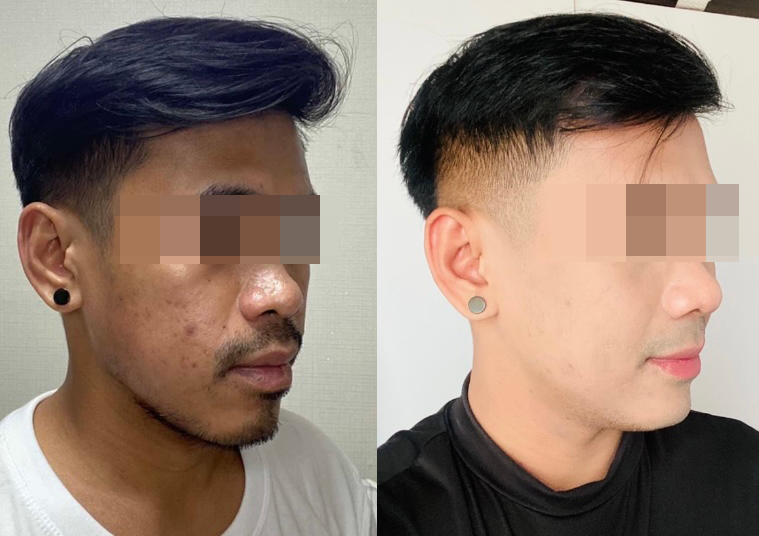
Before and After
#Case 1. Before & After (3Months)


#Case 2. Before & After (7Months)
💬 Riley’s Note
Choosing between SSRO vs IVRO is never a one-size-fits-all situation.
Your TMJ condition, bite pattern, asymmetry level, age, and healing ability all influence the optimal method.
With accurate diagnosis and planning, orthognathic surgery can offer both functional and aesthetic improvement—and long-lasting stability.
👉 Learn More
If you want more surgery information, Click to Orthognathic Surgery in korea at ID Hospital
If you need more detailed assistance, click here.
👉 https://forms.gle/xy1Nr3XNu3DmCXNs5


My brother suggested I might like this website He was totally right This post actually made my day You cannt imagine just how much time I had spent for this information Thanks
Thank you 🙂